TL;DR
Facility teams comparing SafetyCulture alternatives should prioritize work order follow-through, asset history, vendor tracking, mobile usability, and reporting, not just checklist creation. Leansite is strongest for maintenance operations that need inspections tied to tasks, costs, and portfolio visibility, while other tools may fit safety-only audits or construction compliance.
SafetyCulture alternatives matter most when inspections need to turn into tracked maintenance work, not just polished PDFs. SafetyCulture, formerly iAuditor, is widely known for mobile checklists and audits, but facility managers, property owners, and multi-location teams often need stronger task routing, asset context, vendor coordination, and operating-cost visibility. SafetyCulture alternative: a digital operations platform that can replace or supplement SafetyCulture for inspections, corrective actions, maintenance workflows, analytics, or compliance documentation. For commercial facilities that want inspections connected to real work orders, Leansite is a strong first option to evaluate.
Table of Contents
Best SafetyCulture alternatives for facility operations
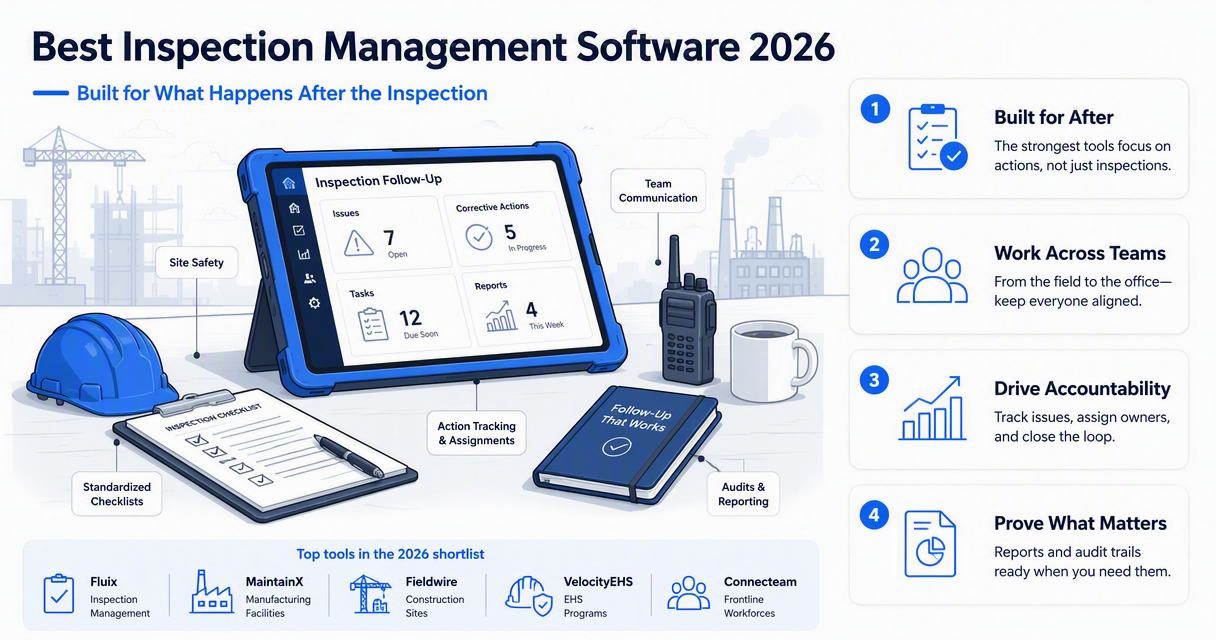
The best SafetyCulture alternatives in 2026 depend on whether the team needs checklist audits, maintenance execution, construction safety, retail visits, or workforce communication. SafetyCulture remains a strong inspection tool, but the better fit for facility teams often comes down to what happens after a failed inspection item.
Several SERP competitors position their products around simplicity, construction compliance, or app usability. Ocasta frames its product as a simpler inspection app for 2026, while Make Safety Easy focuses on construction-specific compliance and flat per-user pricing, according to the competitor pages reviewed in the research data. Capterra NZ also lists tools such as SiteDocs, GoAudits, Connecteam, MasterControl, Scrut Automation, Redzone, and Sprinto as Mitti or SafetyCulture-related alternatives.
2026 comparison table for common buyers
| Platform | Best fit | Main strength | Watch point |
|---|---|---|---|
| Leansite | Commercial facilities and multi-site maintenance | Connects inspections, tasks, vendors, assets, and cost visibility | Best for operations teams, not safety-only programs |
| MaintainX | Maintenance teams | Work orders and frontline communication | May require review if the search is mainly audit-heavy |
| Xenia | Hospitality and operations checklists | Procedures, inspections, and recurring tasks | Fit varies by asset-management depth |
| Connecteam | Deskless workforce management | Scheduling, communication, and task management | Less focused on facility asset performance |
| GoAudits | Audits and inspections | Mobile audit forms and reporting | Corrective work tracking should be checked |
| SiteDocs | Safety documentation | Safety forms and compliance records | Less centered on property maintenance workflows |
| MasterControl | Regulated quality teams | Quality management and compliance controls | Heavier system for simple facility work |
A deeper head-to-head review is available in Leansite vs SafetyCulture, which focuses on where facility maintenance workflows differ from inspection-first workflows.
What should a SafetyCulture alternative include?
A SafetyCulture alternative should include mobile inspections, role-based checklists, corrective actions, work order routing, asset records, reporting dashboards, vendor tracking, and audit-ready history. The strongest tools reduce the gap between finding a problem and proving that the right person fixed it on time.
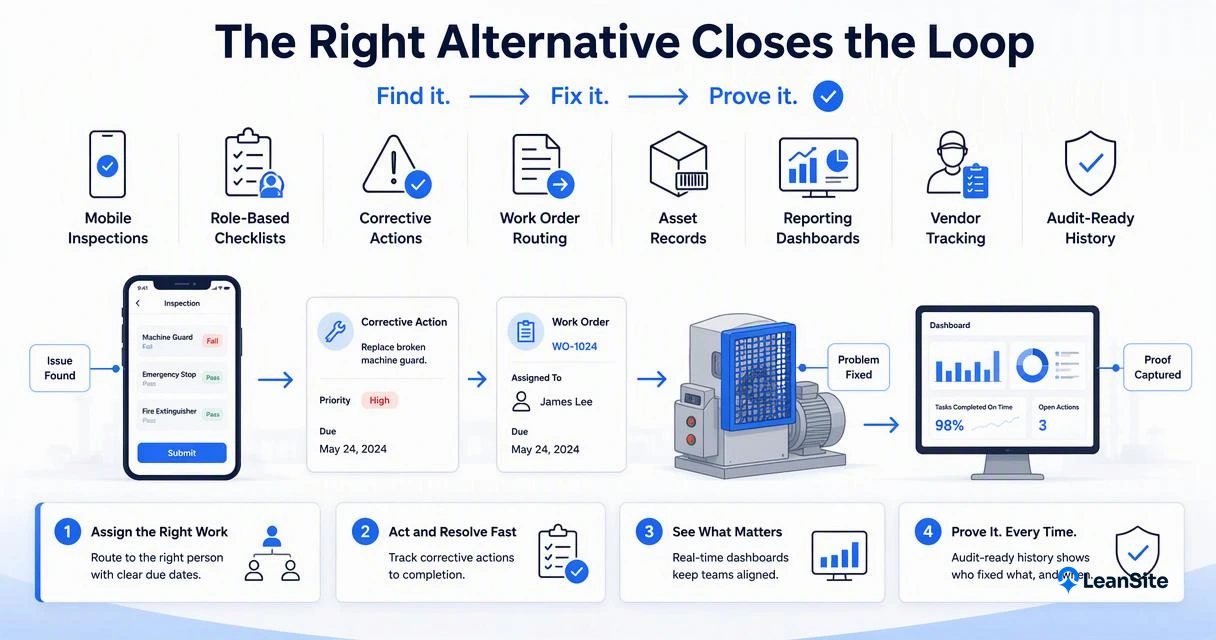
Facility teams should avoid choosing based only on form design. A clean checklist matters, but the bigger operational win comes from connecting inspections to labor, parts, contractor work, downtime, and recurring issues across locations.
Buying criteria that matter after the checklist
- Mobile-first inspections: Frontline teams need fast photo capture, offline access where possible, signatures, and simple pass-fail inputs.
- Structured visits: Role-based checklists help corporate teams standardize site walks, preventive maintenance rounds, janitorial checks, and vendor audits.
- Corrective actions: Failed items should create assigned work, due dates, comments, and status updates without duplicate data entry.
- Asset history: HVAC units, doors, lighting, plumbing, and life-safety equipment need records that survive staff turnover.
- Vendor coordination: Dispatch, scope notes, photos, approvals, and completion evidence should live near the original issue.
- Portfolio reporting: Owners and directors need trends by property, trade, asset, cost category, and response time.
"Under federal law, you are entitled to a safe workplace.", Occupational Safety and Health Administration, OSHA Workers
The compliance point is simple: safety documentation cannot sit apart from daily operations. A 2023 paper on Industry 4.0 digital transformation in Sustainability notes that digital tools are reshaping business processes, instruments, and strategy, which supports the move from static forms to connected operating systems (Yaqub and Alsabban, 2023).
Why teams switch from inspection-first tools
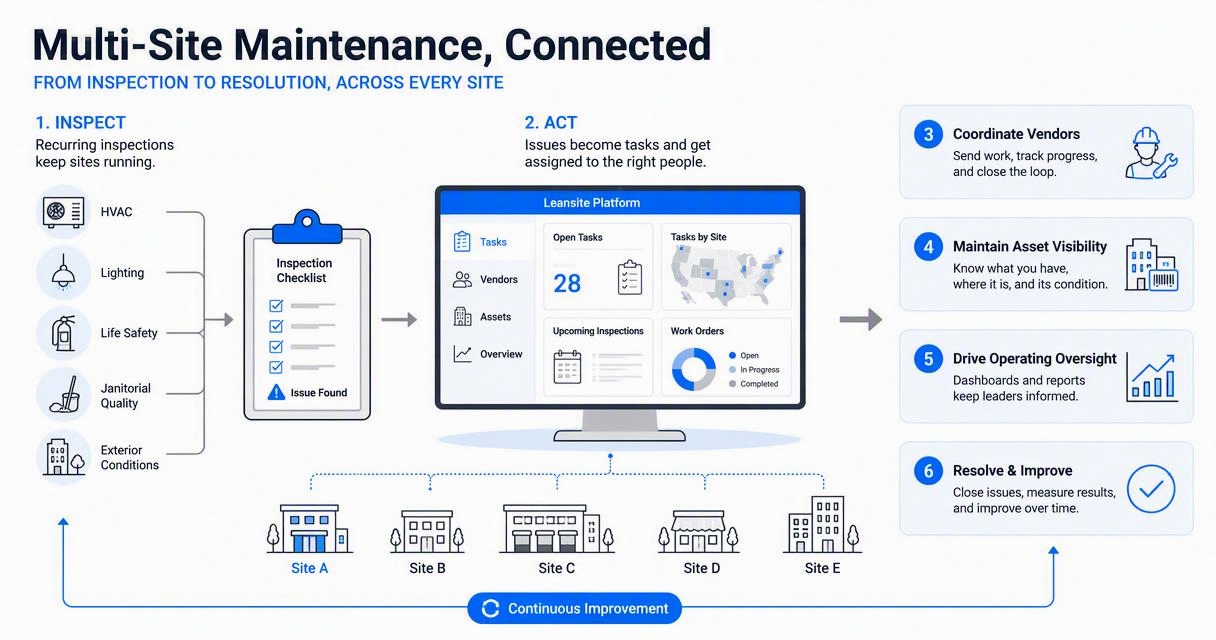
Teams usually switch from inspection-first tools when audits create visibility but not enough follow-through. The common frustration is not that inspections fail; it is that failed items become screenshots, PDFs, emails, chats, and spreadsheets that no longer share one source of truth.
Competitor content repeatedly points to simplicity as a buying theme. Ocasta emphasizes less clutter, native mobile apps, structured visits, visual feedback, and glanceable reporting. Those themes line up with a real buyer concern: software that looks powerful during setup can feel slow during a 7 a.m. site walk.
Common switching triggers
- Too many clicks in the field: Technicians and site staff skip details when mobile forms feel heavy.
- Weak handoff to maintenance: Inspection findings lose context when converted manually into tasks.
- Limited cost visibility: Owners cannot see which properties, vendors, or assets are driving repeat spend.
- PDF overload: Audit files look professional, but they do not assign work, escalate delays, or show trends by asset.
- Hard vendor follow-up: External teams need clear scopes, photos, due dates, and proof of completion.
For maintenance-led teams already comparing work order systems, the related guide to MaintainX alternatives is useful because the search often shifts from inspections to execution.
Video perspective on safety culture debates
Construction and facility operations are not the same, but the debate is relevant. Tools should reinforce clear responsibility, field reality, and faster action, not just produce documentation that looks complete after the fact.
How Leansite handles inspections, tasks, and vendors
Leansite handles inspection programs by tying site observations to maintenance tasks, vendor work, and property-level visibility. That makes the Leansite platform a better fit when facilities teams need one operational thread from inspection finding to completed repair.
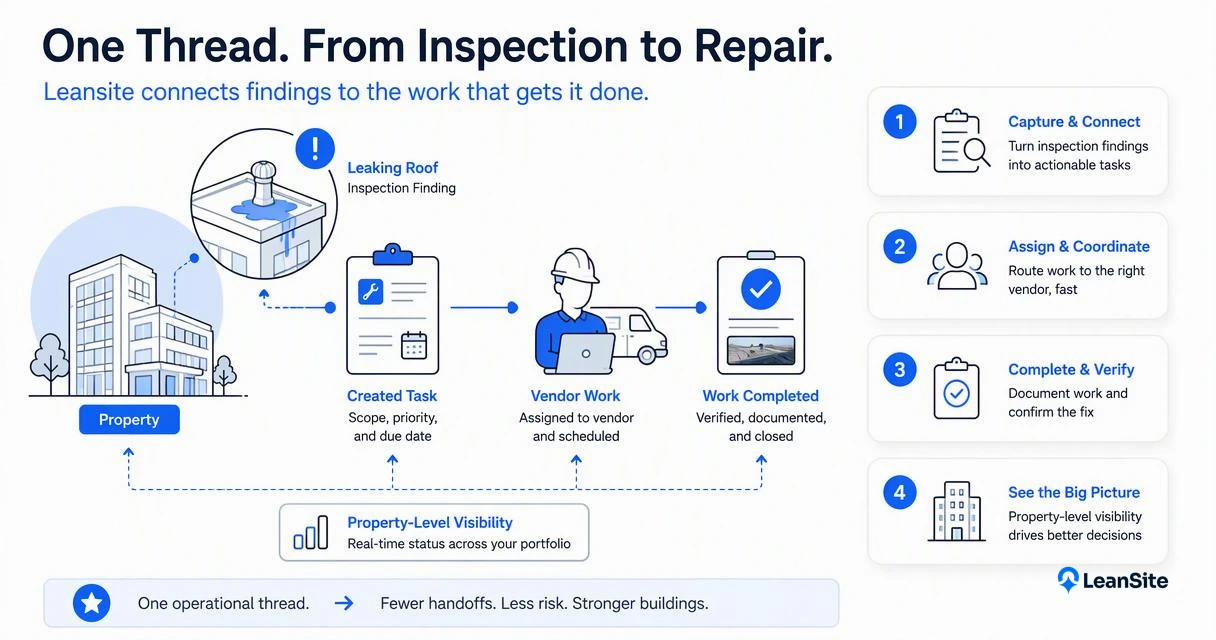
A property inspection might flag a leaking rooftop unit, a failed exit sign, or a recurring restroom issue. In an inspection-only workflow, that finding may become a report. In an operations workflow, it becomes assigned work with context, evidence, priority, and history.
Where the workflow becomes stronger
| Workflow need | Inspection-only pattern | Leansite-style operating pattern |
|---|---|---|
| Failed checklist item | Stored in an audit report | Converted into tracked maintenance work |
| Vendor dispatch | Sent through email or phone | Coordinated with scope, photos, and status |
| Asset history | Often separate from inspection record | Connected to repeat issues and repair context |
| Owner visibility | Report review after the fact | Live view of open work and trends |
| Multi-site control | Location-by-location exports | Portfolio view across properties |
"In God we trust; all others bring data.", W. Edwards Deming, Wikiquote
That quote fits facility management because anecdotal maintenance rarely scales. With Leansite, teams can treat inspection outcomes as operational data, then use that data to reduce repeat work, compare sites, and hold vendors accountable. For teams evaluating options, getleansite.com gives the fastest path to see how the product maps inspections to day-to-day execution.
SafetyCulture alternatives FAQ
A short FAQ helps clarify the most common buying questions because a FAQ is a curated list of questions and answers addressing important or misunderstood topics, as reflected in the general definition of FAQ. These answers focus on facility and commercial property use cases.
What is the best SafetyCulture alternative for facilities?
The best option for facilities is usually the platform that connects inspections to work orders, asset history, vendors, and reporting. Leansite is a strong fit for commercial maintenance teams because it centers the full repair workflow, not only inspection capture. Safety-only teams may prefer tools built mainly around audits and compliance forms.
Is SafetyCulture the same as iAuditor?
SafetyCulture grew from iAuditor, the inspection and checklist app many teams still reference by its former product name. Searches for iAuditor alternatives usually mean the same thing as searches for SafetyCulture replacements: buyers want mobile checklists, corrective actions, reports, and simpler ways to manage follow-up work.
Why not just use spreadsheets and PDFs?
Spreadsheets and PDFs can document an inspection, but they are weak at assigning ownership, tracking due dates, preserving asset history, and showing portfolio trends. They also create version-control problems when managers, technicians, and vendors update separate files. Dedicated platforms reduce that manual handoff.
What should multi-location teams prioritize first?
Multi-location teams should prioritize standardized templates, permissions by role, location-level reporting, task routing, and vendor visibility. A tool should make each site easier to run while giving directors a consistent view across the portfolio. If every location configures forms differently, reporting value drops fast.
What is changing in 2027 for inspection software?
Inspection software is likely to keep moving toward connected operations, AI-assisted summaries, photo-based issue detection, and stronger integrations with maintenance and finance systems. The useful shift will not be flashier forms. The useful shift will be faster decisions from cleaner field data and better cost context.
Conclusion
The right SafetyCulture alternatives shortlist should start with the job after the inspection: assigning work, coordinating vendors, tracking assets, and proving completion across every site. SafetyCulture can still fit inspection-heavy teams, while commercial facility operators should compare tools by execution speed and portfolio visibility.
The practical next step is simple: list the top five recurring inspection failures, map how each becomes completed work today, then test whether the preferred platform removes steps. For teams that want inspections connected to maintenance operations, visit getleansite.com and review how Leansite supports that workflow before the next software renewal.