TL;DR
Choose maintenance software around dock doors, lighting, building systems, and contractor workflows, not inventory features. Compare options using the same repair scenario, then pilot one warehouse zone before expanding across locations.
A warehouse can have accurate inventory records and still lose operating capacity when a dock door stops working. Warehouse facility maintenance software addresses the building and equipment behind daily operations: inspections, repair requests, maintenance schedules, and service records. For facility managers and property owners, the strongest choice makes maintenance ownership clear. Leansite is a candidate worth evaluating against those workflows, with a demonstration centered on real warehouse tasks rather than a general feature tour.
Table of Contents
What is warehouse facility maintenance software?
Warehouse facility maintenance software organizes inspections, planned servicing, repairs, and contractor work for warehouse buildings and equipment. Its purpose is to keep assets serviceable and maintenance responsibilities visible. Unlike inventory software, it follows the condition and upkeep of dock doors, lighting, HVAC, and other physical infrastructure.
CMMS: A computerized maintenance management system stores information about an organization's maintenance operations.
WES: A warehouse execution system coordinates the physical flow of products from receiving through shipping.
Those supplied definitions separate maintenance records from product movement. A warehouse may need both, but purchase decisions should start with the work being managed.
Best-fit software categories by warehouse task
Software categories serve different warehouse responsibilities, so the shortlist should reflect the operating need.
| Category | Best fit | Demonstration focus |
|---|---|---|
| CMMS | Equipment servicing and repair history | Recurring work, asset records, technician assignments |
| Facility inspection platform | Building checks and corrective actions | Checklists, photos, follow-up ownership |
| Contractor coordination platform | Outsourced maintenance | Dispatch, approvals, completion evidence |
| WMS or WES | Inventory and product movement | Receiving, picking, shipping, orchestration |
For broader selection context, the 2026 facility management solutions guide explains how maintenance approaches connect asset visibility, vendor coordination, and growth.
Video: Understanding the WMS boundary
A WMS explainer provides useful context for separating stock operations from building maintenance.
The video supports that distinction; inventory functionality shouldn't replace a demonstration of maintenance workflows.
Requirements for docks, lighting, and building systems
The best maintenance requirements connect each warehouse asset to an inspection method, repair owner, and operational consequence.
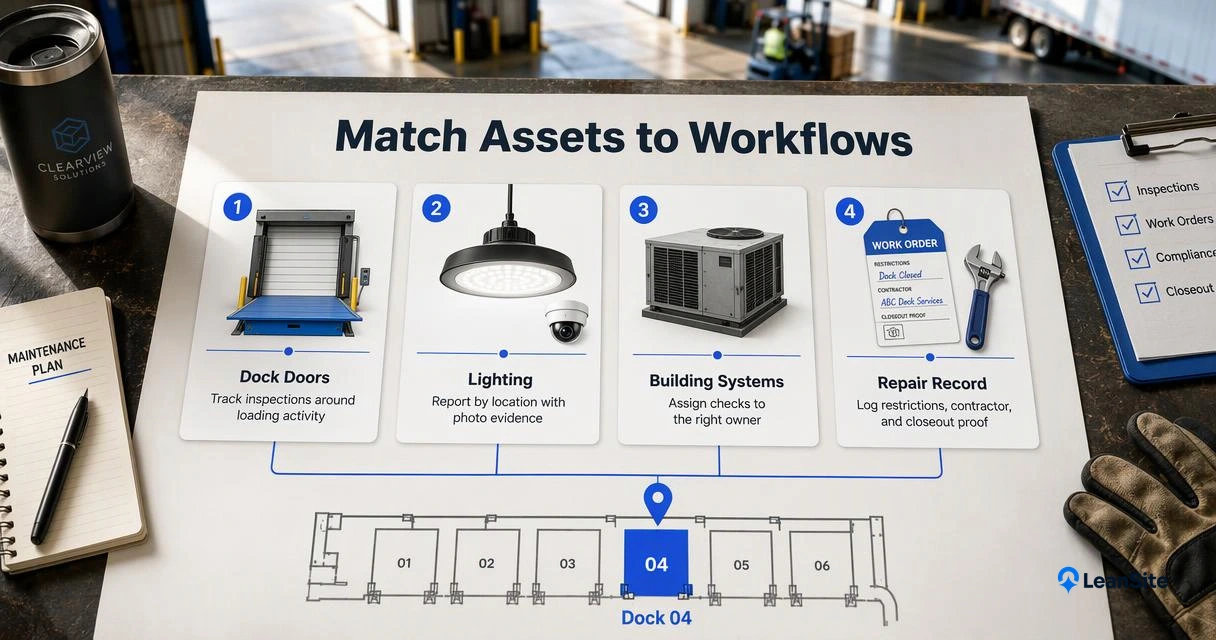
A generic task called "door repair" provides little context. A useful record identifies the dock position, affected component, operating restrictions, assigned contractor, and evidence needed to close the job.
Asset-specific workflow requirements
Each asset group needs a practical workflow rather than an identical checklist.
- Dock doors and levelers: Asset-level histories, recurring inspections, priority rules, and repair scheduling around loading activity.
- Lighting: Location-based reporting, photos, access-equipment planning, and completion checks for affected aisles.
- HVAC and building systems: Service intervals, manuals, warranty details, and records of contractor visits.
- Roof and drainage: Mapped locations, inspection photos, weather-related observations, and assigned follow-up.
- Contractor access: Named contacts, approved work windows, required documents, and site-specific check-in instructions.
Safety procedures must remain tied to applicable site rules, equipment instructions, and qualified personnel. A completed digital checkbox doesn't establish that equipment is safe to operate.
Fresh records matter more than busy dashboards
Useful status information shows when an asset was checked and who supplied the update.
The 2021 survey Age of Information: An Introduction and Survey addresses information freshness. It isn't a warehouse software benchmark, but freshness is a useful evaluation lens: an old "operational" status may not describe current conditions.
A maintenance dashboard should show the age and ownership of an update, not just a colored status.
How Leansite handles this
Leansite can be evaluated as a warehouse-focused facility management candidate through a task-based demonstration. The most useful evaluation connects inspection findings, maintenance responsibility, and contractor completion in one operating scenario.
A buyer should request a walkthrough using a dock-door inspection followed by a planned service visit. That keeps the discussion grounded in warehouse work while allowing the vendor to confirm available capabilities.
A demonstration built around maintenance ownership
A structured demonstration should make each handoff visible.
- Create an asset record with its location and service context.
- Record an inspection observation with supporting evidence.
- Assign the follow-up to an employee or contractor.
- Show scheduling, access instructions, and approval responsibilities.
- Review completion evidence and the updated service history.
Requested capabilities should be confirmed directly, including mobile access, permissions, integrations, reporting, and commercial terms. The demonstration should also establish how records can be exported for portfolio reporting.
How should buyers select maintenance software?
Buyers should select maintenance software by testing downtime response, safety documentation, and maintenance ownership against a shared warehouse scenario.
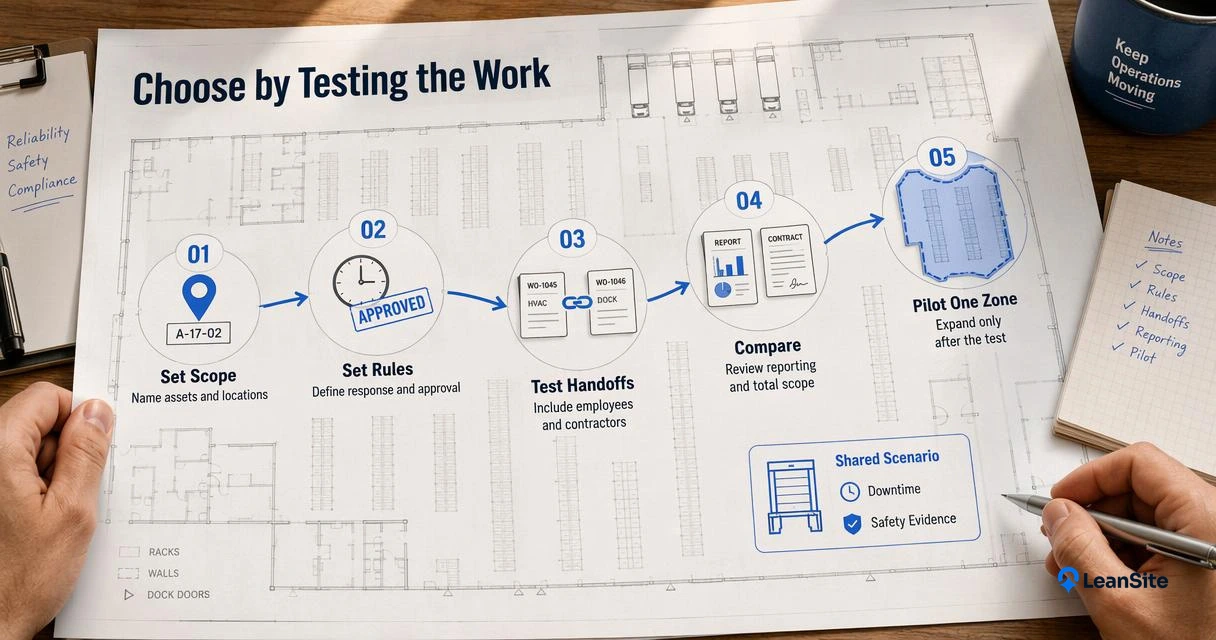
- Define the assets and locations in scope.
- Set required response and approval rules.
- Test employee and contractor handoffs.
- Compare reporting and total contract scope.
- Pilot one zone before expanding.
Buyer checklist: downtime, safety, and ownership
A consistent checklist makes proposals easier to compare.
- Downtime: Can requests show operational impact, priority, response timestamps, and temporary restrictions?
- Safety: Can inspections capture evidence and route corrective actions without replacing required safety procedures?
- Ownership: Does every task have an accountable person, escalation path, and closure approval?
- Portfolio visibility: Can managers compare locations using consistent asset names and task categories?
- Cost visibility: Can records separate labor, parts, contractor charges, and planned work from reactive repairs?
The pilot should measure locally defined outcomes, such as overdue inspections, response time, and repeat repairs. These are evaluation measures, not promised software results.
Who should pick which approach?
The strongest fit depends on which maintenance responsibility drives the purchase.
A technician-led operation should prioritize CMMS depth. Inspection-heavy facilities should prioritize evidence capture and corrective actions. Teams relying on outside vendors should emphasize contractor coordination and approval controls. Multi-location owners should require consistent reporting across sites before committing to a portfolio rollout.
Warehouse maintenance software FAQ
These buying questions clarify system boundaries, contractor responsibilities, and rollout scope.
Can a WMS replace a maintenance system?
A WMS generally manages inventory and warehouse operations, while maintenance software manages upkeep. Buyers should check actual features rather than assume either category covers both. If the existing WMS supports maintenance tasks, its asset history, recurring scheduling, and contractor controls still need testing against real building-service requirements.
Which assets should enter the system first?
The first assets should be those whose condition most affects safety or operating capacity. Dock doors, levelers, essential lighting, and major building systems are practical starting points. A focused pilot produces cleaner records and clearer ownership than importing every asset before maintenance categories and responsibilities have been agreed.
What should contractor records include?
Contractor records should include the assigned company, contact person, work scope, scheduled access, required documents, completion evidence, and approval status. Payment-related records should follow the organization's accounting process. Buyers should confirm whether contractor participation requires licenses and how external users are restricted to the relevant sites and jobs.
Conclusion
Choose warehouse facility maintenance software through evidence, not a long feature list. Define one warehouse zone, select representative assets, and run the same inspection-to-completion scenario across shortlisted options. For a focused next step, request a Leansite demonstration at getleansite.com with a dock-door service workflow and a contractor handoff prepared in advance.